
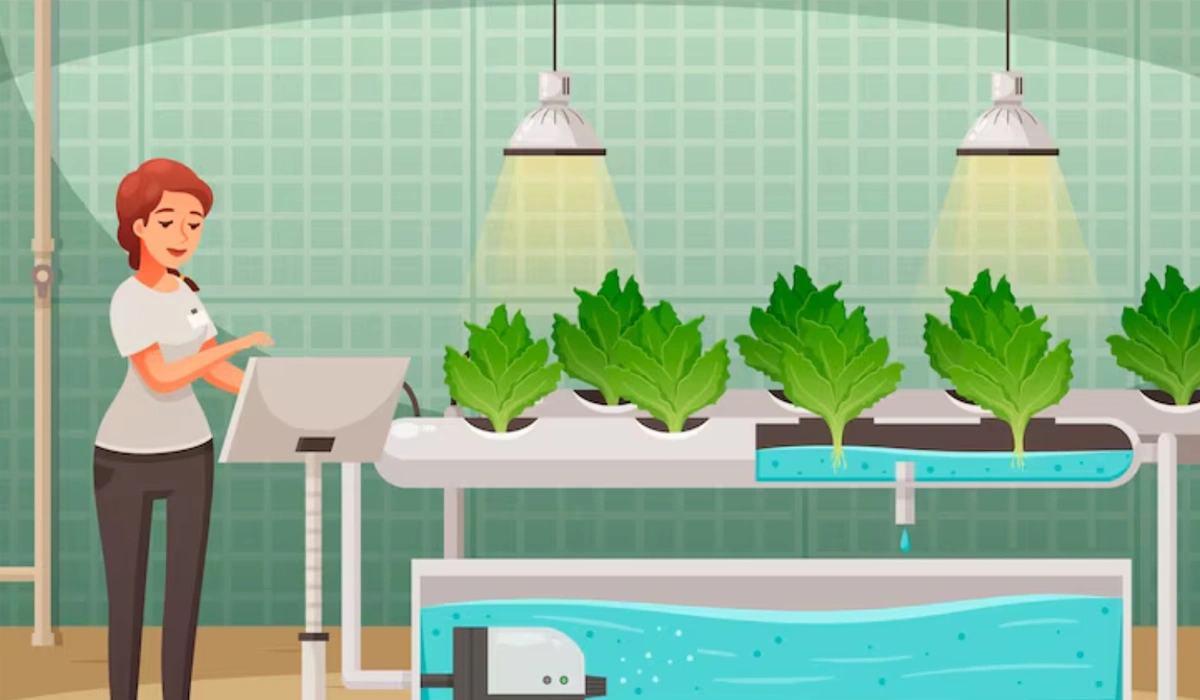
Hydroponic Farming: Rethinking the Way We Grow Food
Imagine growing fresh vegetables, herbs, and even fruit — all year round, indoors or in a small greenhouse, without ever touching a shovel or dealing with muddy soil. That’s the world of hydroponic farming, where plants thrive in nutrient-rich water instead of earth.
What makes this method remarkable isn’t just its futuristic appeal — it’s its efficiency. Hydroponic systems can use up to 90% less water than traditional farming and often produce twice the yield in half the space. In a time when arable land and clean water are shrinking resources, hydroponics offers a way forward: clean, controlled, and sustainable agriculture that fits into homes, cities, and deserts alike.
Across the United States, hydroponic farming is quietly transforming food production. From small apartment setups to multi-acre commercial greenhouses, people are learning that growing without soil doesn’t just work — it works better.
The Science Behind Hydroponics
At its heart, hydroponic farming is beautifully simple. Plants need three main things to grow: water, nutrients, and light. In soil-based agriculture, the earth provides the nutrients and anchors the roots. In hydroponics, we skip the soil and deliver everything directly through water.
In a hydroponic system, roots sit in a nutrient solution that’s perfectly balanced with minerals like nitrogen, phosphorus, potassium, calcium, and magnesium. These elements are dissolved in water, making them immediately available to the plant — no waiting for natural decomposition or rain cycles.
That’s what makes hydroponics so fast and productive: plants get what they need, when they need it, without waste or competition from weeds.
How Plants Grow Without Soil
When a plant is grown in soil, its roots have to work hard to search for nutrients and water. In hydroponics, that energy is redirected toward leaf and fruit growth instead.
Because the plant’s “food” is delivered straight to its roots, it grows faster, stronger, and often with higher yields.
To keep roots stable, hydroponic setups use inert growing media — materials that don’t add nutrients but support the plant physically. Common options include:
- Coconut coir: Made from coconut husks, holds water well
- Perlite: Volcanic glass that keeps roots aerated
- Rockwool: Fibrous rock material, great for large systems
- Clay pebbles: Durable and reusable for long-term setups
Each medium provides structure while the nutrient solution does the feeding.
A Closed-Loop System
Another unique feature of hydroponic farming is its closed-loop design. In soil farming, water and nutrients often wash away through irrigation and rainfall. In hydroponics, nothing is wasted. The solution circulates through the system continuously, meaning water and fertilizers are reused until they’re fully absorbed or replaced.
This recycling approach reduces environmental impact dramatically — making hydroponics one of the most eco-efficient food systems in modern agriculture.
A Brief History of Hydroponics
While it feels futuristic, the idea of growing plants without soil isn’t new.
- Ancient Roots: The earliest known examples go back thousands of years. The Hanging Gardens of Babylon — one of the Seven Wonders of the Ancient World — used irrigation channels and flowing water to nourish plants on terraced walls. Similarly, the Aztecs built chinampas, floating gardens that grew crops on shallow lake beds using nutrient-rich water.
- Modern Discovery: In the 19th century, German botanists discovered that plants could grow in water as long as it contained the right dissolved minerals. This led to early experiments in “water culture,” the foundation of hydroponic farming as we know it today.
- 20th Century Breakthroughs: The term hydroponics (from the Greek hydro for water and ponos for labor) was coined in the 1930s by Dr. William F. Gericke of the University of California. He demonstrated that tomatoes and other crops could be grown entirely in nutrient solutions, achieving larger yields than in soil.
- Hydroponics in Space: NASA later adopted hydroponic principles for space missions. Since soil isn’t available in orbit, astronauts have used hydroponic systems to grow lettuce, radishes, and other crops aboard the International Space Station — proving that it’s possible to sustain life in space using this technology.
Today, hydroponics has evolved from experimental science into mainstream agriculture. Countries like the Netherlands, Singapore, and the U.S. lead the way, using controlled environments to produce vegetables efficiently, even in areas with poor soil or harsh climates.
Why Hydroponics Matters Today
As global demand for food increases and arable land decreases, the need for smarter farming solutions has never been greater. Hydroponic farming offers several game-changing advantages for both the planet and the grower.
1. Water Conservation
Hydroponic systems recycle their water, reducing overall use by up to 90%. For regions facing drought or water restrictions — like parts of California, Arizona, and Nevada — this method is not just innovative, it’s essential.
2. Space Efficiency
Since plants don’t need soil, they can be stacked vertically in towers or shelves, allowing massive production in small areas. A 1,000-square-foot hydroponic greenhouse can often outperform a 5,000-square-foot traditional farm.
3. Faster Growth
Because nutrients are readily available, hydroponic plants can grow 30–50% faster than soil-grown ones. That means multiple harvests per year — and a steadier supply of fresh produce.
4. Year-Round Harvesting
Hydroponic systems can operate indoors or in greenhouses with artificial lighting, meaning crops can grow through all seasons. Farmers no longer depend on weather or soil conditions — everything is controlled.
5. No Weeds, Pests, or Soil Diseases
No soil means no weeds. It also reduces pest infestations and eliminates soil-borne diseases that plague traditional farms. This allows growers to reduce pesticide use dramatically or avoid it entirely.
6. Cleaner, Fresher Produce
Hydroponic crops grow in clean, nutrient-rich environments, often indoors. They’re free from soil residues, meaning they’re cleaner and safer for consumption — especially for urban farms supplying fresh produce directly to restaurants and stores.
7. Sustainability and Urban Farming
Hydroponics fits perfectly into the vision of urban agriculture — bringing food production closer to cities and reducing transportation costs and emissions. Imagine rooftop gardens in New York or indoor farms in Los Angeles providing fresh greens within hours of harvest.
Common Myths About Hydroponic Farming
Like any new technology, hydroponics has faced its share of misconceptions. Let’s clear up a few:
Myth 1: Plants Need Soil to Grow
False. Plants need nutrients, not soil. The soil’s main role is to hold nutrients and water — both of which hydroponics delivers directly and more efficiently.
Myth 2: Hydroponic Produce Is Not Organic
While hydroponic farming doesn’t use soil, it can still be pesticide-free and organic if natural fertilizers and sustainable methods are used. In fact, many hydroponic farms are USDA-certified organic.
Myth 3: It’s Too Expensive
Starting costs can be higher than backyard gardening, but once the system is running, maintenance is minimal. Hydroponics saves money in the long run through higher yields, lower water use, and year-round production.
Myth 4: It’s Complicated
Hydroponic systems may sound high-tech, but modern kits and automation tools make them beginner-friendly. Anyone can start small — even with a tabletop herb garden.
Types of Hydroponic Systems (Overview)
Before we dive deeper into how to build your own system in the next section, let’s get familiar with the main types of hydroponic setups used today. Each has its own advantages depending on space, scale, and crop type.
1. Deep Water Culture (DWC)
Plants float on nutrient-rich water with roots suspended below. An air pump supplies oxygen, keeping roots healthy. It’s simple, low-maintenance, and perfect for leafy greens.
2. Nutrient Film Technique (NFT)
A thin film of nutrient solution continuously flows over plant roots inside sloped channels. It’s efficient and works best for smaller plants like lettuce or herbs.
3. Ebb and Flow (Flood and Drain)
Plants sit in a tray that’s periodically flooded with nutrient solution, then drained. Great for larger plants that prefer cycles of moisture and air exposure.
4. Drip System
Nutrients are dripped onto the base of each plant individually. It’s highly customizable and commonly used in commercial hydroponic greenhouses.
5. Aeroponics
Roots hang in the air and are misted with nutrients. This is the most advanced method — it uses less water and grows plants fastest, but it requires precise control and equipment.
6. Wick System
The simplest type — no pumps or electricity. Wicks draw nutrient solution up to the roots using capillary action. Ideal for beginners and small indoor setups.
Getting Started: Building Your First Hydroponic System
Hydroponics may sound complex at first glance — pumps, lights, nutrients, and water cycles — but once you understand the basic structure, it’s surprisingly logical. The beauty of it lies in control. You decide exactly what your plants receive and when.
Before setting up your first system, think about three main questions:
- Where will you grow? (indoor room, greenhouse, or outdoor shed)
- What will you grow? (leafy greens, herbs, fruiting vegetables, etc.)
- How much do you want to produce? (personal use or for sale)
Once you know those answers, you can choose the right system and design around it.
Essential Components of Any Hydroponic System
Regardless of the type — DWC, NFT, or Drip — every hydroponic setup includes the same five building blocks:
1. Growing Containers or Channels
This is where your plants sit. It can be anything from a simple plastic bucket to custom-built PVC channels or trays.
These containers hold your growing medium and provide stability for the roots.
For home growers, 5-gallon buckets, plastic storage bins, or DIY PVC pipes work perfectly.
For larger systems, growers use food-grade reservoirs or modular trays built for greenhouses.
Tip: Avoid metal containers; they can react with nutrient solutions and cause chemical imbalances.
2. Reservoir
The reservoir holds the nutrient solution that feeds your plants. It’s usually placed below the growing tray and connected with tubing that allows the water to circulate.
A small system might use a 10–20-liter tank, while commercial ones use hundreds of gallons. The size depends on how many plants you’re growing and how often you want to refill it.
Keep your reservoir:
- Opaque (to prevent algae growth)
- Covered (to avoid evaporation and contamination)
- Accessible (so you can clean and monitor water levels)
3. Water Pump and Air Pump
Hydroponics relies on movement. Stagnant water quickly loses oxygen and can suffocate roots.
- Water Pump: Moves nutrient solution through your system — circulating between the reservoir and growing trays.
- Air Pump: Adds oxygen to the water, keeping roots alive and preventing disease.
In most home systems, small aquarium pumps are perfect. Commercial farms use high-capacity pumps with built-in timers and filters for automation.
You May Also Like:
Comprehensive Guide to Pet Health Insurance in 2025
4. Growing Medium
As discussed earlier, hydroponics replaces soil with an inert medium that gives roots support and air flow.
Here’s a quick comparison of common options:
| Medium | Best For | Advantages |
|---|---|---|
| Coconut Coir | Leafy greens, herbs | Eco-friendly, retains water |
| Perlite | Fast-growing crops | Lightweight, improves aeration |
| Clay Pebbles (LECA) | Reusable systems | Easy to clean, good drainage |
| Rockwool | Seedlings, large crops | Holds moisture evenly |
Always rinse media before use to remove dust or residues that might affect pH.
5. Nutrient Solution
This is the lifeblood of your system. The nutrient solution provides all the minerals your plants need in a soluble, immediately available form.
Most hydroponic growers buy ready-mixed nutrient concentrates — labeled as “Part A” and “Part B.” These ensure proper balance of macronutrients (NPK) and micronutrients (iron, calcium, magnesium, zinc).
Some growers mix their own using fertilizers like calcium nitrate, potassium phosphate, and magnesium sulfate, but beginners should start with commercial blends for simplicity and accuracy.
Setting Up Your Hydroponic System Step by Step
Here’s how to set up a simple home hydroponic system — specifically a Deep Water Culture (DWC), one of the easiest and most effective methods for beginners.
Step 1: Prepare the Reservoir
Choose a sturdy, lightproof container — around 10–20 gallons. Fill it with water, ideally filtered or reverse osmosis (RO) water to avoid chlorine or heavy metals.
Add your nutrient concentrate according to the manufacturer’s instructions, usually 5–10 milliliters per liter. Mix thoroughly and check:
- pH: Should be between 5.5 and 6.5
- EC (Electrical Conductivity): 1.2–2.0 for leafy greens, higher for fruiting crops
You can measure both using affordable digital meters.
Step 2: Install Air Pump and Stones
Place an air stone (like those used in aquariums) in the bottom of your reservoir, connected to the air pump outside.
This keeps oxygen circulating through the water, preventing root rot.
Step 3: Prepare the Net Pots
Net pots are small containers with holes, allowing roots to grow through. Fill each with your chosen growing medium (e.g., clay pebbles or coco coir).
Insert seedlings or seeds carefully — you want the roots to touch the nutrient water below, but not be fully submerged initially.
Step 3: Prepare the Net Pots
Net pots are small containers with holes, allowing roots to grow through. Fill each with your chosen growing medium (e.g., clay pebbles or coco coir).
Insert seedlings or seeds carefully — you want the roots to touch the nutrient water below, but not be fully submerged initially.
Step 4: Assemble the Lid
Cut holes in your reservoir lid to fit your net pots snugly. This keeps the setup stable and limits light exposure to the water.
Step 5: Turn It On
Plug in your air pump and water pump (if you have one).
The water should bubble constantly, keeping oxygen levels high.
Now you have a fully functioning hydroponic setup — silent, clean, and efficient.
Indoor Lighting: Bringing the Sun Inside
Sunlight is the natural fuel of photosynthesis, but for indoor hydroponics, artificial lighting takes its place. The right light determines your plant’s growth rate, yield, and flavor.
Types of Grow Lights
- LED Grow Lights: Energy-efficient, long-lasting, and customizable spectrum. Ideal for both home and commercial setups.
- Fluorescent (T5/T8) Tubes: Affordable and cool-running, great for small indoor gardens.
- High-Intensity Discharge (HID): Includes Metal Halide (MH) and High-Pressure Sodium (HPS). Used in professional greenhouses for strong light output.
For leafy greens, use full-spectrum white or blue-rich lights (to promote foliage).
For flowering or fruiting plants, red-spectrum lights encourage blooming and yield.
Light Duration:
- Leafy greens: 14–16 hours/day
- Fruiting crops (like tomatoes): 16–18 hours/day
Set lights on a timer for consistency and to prevent overheating.
Water Quality and pH Management
Water is the foundation of hydroponic success. Poor-quality water can cause nutrient lockout, pH drift, or algae growth.
- pH: Keep between 5.5 and 6.5. Too low and roots burn; too high and nutrients become unavailable.
- Temperature: Ideal water temperature is 65–75°F (18–24°C).
- EC (Nutrient Strength): Maintain 1.2–2.5 mS/cm, depending on crop type.
- Water Change: Replace nutrient solution every 2–3 weeks to prevent buildup.
Tip: Always top up the reservoir with plain water between changes to compensate for evaporation.
Temperature, Humidity, and Airflow
Hydroponics works best in controlled environments.
Ideal conditions for most plants:
- Temperature: 68–77°F (20–25°C)
- Humidity: 50–70%
- Air Circulation: Constant airflow prevents mold and keeps CO₂ levels steady
You can use small fans or ventilation systems in enclosed spaces.
For larger setups, climate control devices like humidifiers, dehumidifiers, and thermostats help maintain perfect growing conditions year-round.
How Much Does It Cost to Start Hydroponic Farming?
Costs depend on the scale of your setup — here’s an approximate guide for the U.S. market:
| Setup Type | Scale | Estimated Cost (USD) |
|---|---|---|
| Home DIY Kit | 6–10 plants | $100–$300 |
| Small Indoor System | 20–40 plants | $500–$1,200 |
| Mid-Scale Greenhouse | 200–500 plants | $5,000–$15,000 |
| Commercial Farm | 5,000+ plants | $50,000–$200,000+ |
Initial investment covers structure, pumps, lights, and nutrients.
After setup, recurring costs include water, electricity, and nutrient refills — generally much lower than traditional farming expenses.
Many growers recoup their investment within 1–2 years due to faster harvest cycles and reduced waste.
Home vs. Commercial Hydroponic Farming
Home Systems
Perfect for enthusiasts, students, or anyone who wants a cleaner way to grow fresh produce.
Advantages:
- Minimal space required
- Easy to manage
- No pesticides
- Can double as an educational or therapeutic hobby
Leafy greens and herbs thrive in small systems — lettuce, basil, mint, spinach, and kale grow beautifully indoors.
Commercial Systems
Commercial hydroponic farms operate on a larger scale, using climate-controlled greenhouses or warehouses with artificial lighting.
They supply grocery stores, restaurants, and farmers’ markets with fresh, local produce.
Advantages:
- Consistent year-round output
- High yield per square foot
- Potential for automation and data tracking
Many commercial growers integrate IoT (Internet of Things) sensors that automatically adjust nutrient delivery, light, and pH.
Maintenance and Daily Routine
Hydroponic systems are low-maintenance, but not no-maintenance.
Here’s what a daily and weekly routine might look like:
Daily Tasks:
- Check water levels
- Observe plant health and leaf color
- Ensure pumps and lights are functioning
- Record temperature and humidity
Weekly Tasks:
- Check and adjust pH
- Refill nutrients if levels drop
- Clean filters and tubing
- Remove any dead leaves or algae buildup
Monthly Tasks:
- Drain and replace the nutrient solution
- Clean the reservoir and air stones
- Inspect equipment for wear and tear
Keeping a simple notebook or using a digital grow log app helps track changes and improve consistency.
Common Problems and How to Solve Them
Even in controlled environments, plants can sometimes struggle. The key is recognizing signs early.
| Problem | Possible Cause | Solution |
|---|---|---|
| Yellow leaves | Nitrogen deficiency or high pH | Adjust nutrient mix or lower pH |
| Brown leaf tips | Nutrient burn | Dilute solution or flush system |
| Wilting plants | Lack of oxygen or pump failure | Check air stones and water flow |
| Algae growth | Too much light in reservoir | Cover tank or use opaque containers |
| Root rot | Warm, stagnant water | Lower temperature and increase aeration |
Hydroponic plants communicate through their leaves — if you pay attention, they’ll tell you exactly what’s wrong.
Scaling Up Gradually
Many growers begin with one small system, then expand over time.
Once you’re comfortable managing nutrient levels and yields, you can connect multiple reservoirs and automate controls.
Scaling doesn’t necessarily mean building bigger; sometimes it means building smarter — integrating digital timers, pH regulators, or climate sensors.
Automation allows you to manage hundreds of plants with the same effort as ten.
Hydroponics and Technology Integration
Hydroponic farming pairs naturally with smart technology. In recent years, controlled environment agriculture (CEA) has combined hydroponics with AI-driven data analytics, resulting in incredible precision and productivity.
Examples include:
- Sensors monitoring nutrient levels and root oxygenation
- Automated dosing systems adjusting fertilizer in real-time
- LED spectrum control that matches plant growth stages
- Mobile apps that notify growers when something’s off
This digital ecosystem is making hydroponic farming not only efficient but also accessible — farmers can now manage full systems remotely from a smartphone.
Choosing the Right Crops for Hydroponic Farming
One of the biggest advantages of hydroponics is flexibility. You can grow almost anything — but some crops perform better than others, especially when you’re just starting.
The best hydroponic plants grow quickly, have compact roots, and don’t need pollination or large spacing.
1. Leafy Greens
These are hydroponic superstars — fast-growing, lightweight, and high-yield.
- Lettuce (Butterhead, Romaine, Crisphead): Matures in just 30–40 days. Great for beginners.
- Spinach: Thrives in cooler environments; rich in iron.
- Kale and Swiss Chard: Nutrient-dense and ideal for vertical systems.
- Arugula: Adds variety and flavor; grows rapidly in NFT or DWC setups.
Leafy greens prefer cooler temperatures (65–70 °F) and mild nutrient strength. They also sell easily to restaurants and farmers’ markets.
2. Herbs
Herbs love hydroponics because of the consistent moisture and nutrient delivery.
- Basil: The most profitable hydroponic herb.
- Mint: Hardy and aromatic; perfect for small systems.
- Cilantro, Dill, Parsley: Grow well under LED lights.
- Thyme, Oregano, Rosemary: Slower growth but higher retail value.
A single 10-square-foot system can produce dozens of herb bunches monthly — enough for household use or local sale.
3. Fruiting Vegetables
Once you master water chemistry and lighting, move to more demanding crops.
- Tomatoes: Require strong light and support trellises. High yield, year-round.
- Peppers: Thrive in warm, stable environments.
- Cucumbers: Grow quickly in drip systems with vertical space.
- Strawberries: Ideal for NFT or vertical towers; very popular in urban farms.
These crops need higher nutrient concentrations and pollination (by hand or with small fans).
4. Exotic and Specialty Plants
As hydroponics matures, growers are experimenting with unique species:
- Microgreens and edible flowers
- Baby carrots and radishes
- Medicinal plants (lavender, aloe vera)
- Ornamental plants like orchids
Specialty crops can bring premium prices, especially in local markets and restaurants seeking unique ingredients.
Advanced Hydroponic Techniques
Once you’re comfortable with basic systems, several advanced methods can help you boost yields, quality, and efficiency.
1. Vertical Farming
Vertical farming stacks plants in multiple layers, often in towers or shelves with LED lighting.
This design maximizes productivity per square foot — perfect for cities or limited spaces.
A single 500-square-foot room can hold thousands of plants. Sensors control temperature, humidity, and light intensity automatically, allowing production 365 days a year.
2. Aquaponics
Aquaponics combines hydroponics with fish farming. Fish waste provides natural nutrients for plants, and the plants clean the water for the fish.
It’s a circular, self-sustaining ecosystem.
Tilapia, trout, and catfish are commonly used because they tolerate variable water conditions.
Although aquaponics requires more setup and monitoring, it can produce both vegetables and protein from one integrated system.
3. Fogponics and Aeroponics
These are advanced offshoots of hydroponics where nutrient solution is delivered as a mist or fog directly to the roots.
This increases oxygen levels dramatically, promoting faster growth and healthier roots.
Aeroponics was famously used by NASA because it’s lightweight, water-efficient, and space-friendly.
4. Climate-Controlled Greenhouses
Modern hydroponic farms often operate inside smart greenhouses.
These structures regulate:
- Temperature and humidity
- Light spectrum and intensity
- Carbon dioxide enrichment
- Air circulation and filtration
Automation ensures precision and reduces labor. Many U.S. farms use climate software that connects sensors to cloud dashboards, allowing farmers to monitor crops from their phones.
Managing Nutrients and Water Quality
The secret to success lies in balance. Even small changes in water chemistry affect growth.
Macronutrients and Micronutrients
Plants need six main macronutrients:
Nitrogen (N) – Leaf growth
Phosphorus (P) – Root and flower development
Potassium (K) – Overall health and disease resistance
Calcium, Magnesium, Sulfur – Structural strength and chlorophyll production
Micronutrients like iron, manganese, zinc, copper, boron, and molybdenum are needed in trace amounts.
Most commercial nutrient solutions already balance these; however, regular testing ensures consistent performance.
Monitoring Tools
- pH Meter: Keeps acidity in range (5.5–6.5).
- EC Meter: Measures electrical conductivity to show nutrient strength.
- Thermometer & Hygrometer: Track temperature and humidity.
Digital sensors with Bluetooth connectivity are now affordable and make daily monitoring simple.
Water Source and Purity
Tap water can vary greatly by region. Hard water containing calcium and chlorine can distort nutrient balance.
Many growers use reverse-osmosis filters to create pure water, then add nutrients precisely.
A clean, stable water source ensures reliability year-round.
Harvesting and Post-Production
Hydroponic crops mature faster, but timing matters.
Harvest when leaves are fully developed but still tender. Use clean scissors or pruning shears to prevent contamination.
After harvesting:
- Rinse produce gently with cool, filtered water.
- Dry on mesh racks or paper towels.
- Store in refrigeration between 36–45 °F (2–7 °C).
Because hydroponic plants grow without soil, they require minimal cleaning — an advantage for commercial packaging.
Some farms install cold-storage rooms connected to the greenhouse to maintain freshness from harvest to delivery.
Economic Side: Operating Costs and Yields
Let’s look at practical performance expectations once your system is stable.
| Scale | Typical Yield per Sq Ft | Estimated Annual Return |
|---|---|---|
| Home / Hobby | 1–2 lbs of greens | Fresh supply for household |
| Small Commercial (500 sq ft) | 25–35 lbs per month | $15 000–$25 000 gross |
| Medium (2 000 sq ft) | 100 lbs per month | $60 000–$100 000 gross |
| Large Greenhouse (10 000 sq ft +) | 500 lbs per month + | Scalable to regional supply |
Numbers vary by crop, lighting, and market, but hydroponic farms often achieve shorter cycles and higher density than soil farms, allowing continuous production and reliable income.
Troubleshooting: When Things Go Wrong
Even well-designed systems encounter hiccups. The key is identifying issues early.
Root Problems:
- Brown roots = lack of oxygen. Add more aeration.
- Slime or odor = bacteria or algae; clean reservoir and lower water temperature.
Leaf Problems:
- Yellowing = nutrient deficiency or high pH.
- Burnt tips = excessive salts; flush system and dilute nutrients.
- Curling = heat stress or light intensity too high.
System Issues:
- Pump failure = install backup or timer alert.
- Algae growth = block light from the reservoir.
- Mold on surface = improve airflow and reduce humidity.
Hydroponic plants respond quickly, so correcting problems usually restores growth within days.
Sustainability and the Environment
Hydroponic farming isn’t just efficient — it’s part of the future of sustainable food systems.
Water Use
Compared with soil farming, hydroponics uses 70–90 percent less water, since the same nutrient solution recirculates continuously.
Land Use
It requires minimal land and no tilling, which prevents soil erosion. Urban farms can occupy rooftops, warehouses, or shipping containers, reducing transport emissions.
Reduced Chemicals
With fewer pests and diseases, hydroponic systems need little or no pesticide. That means cleaner food and a smaller ecological footprint.
Energy Balance
While lighting and pumps consume electricity, advances in solar panels and LED efficiency have reduced energy costs significantly. Many modern farms operate on partial renewable power.
Hydroponics and Urban Agriculture
Cities around the world are adopting hydroponics as a local food solution.
Restaurants in Chicago and New York grow lettuce on-site in glass-walled gardens. In California and Nevada, shipping-container farms are producing greens year-round for supermarkets.
Urban hydroponics shortens the supply chain dramatically. Produce travels a few miles, not thousands, meaning less spoilage and fresher taste.
It also creates new job opportunities — from system maintenance and packaging to education and research.
Education and Research Opportunities
Hydroponics is becoming a popular subject in schools and universities. Students learn biology, chemistry, and sustainability by watching plants grow in transparent systems.
Across the U.S., community colleges now offer Controlled Environment Agriculture (CEA) degrees and certifications. These programs prepare future farmers, technicians, and entrepreneurs for the next wave of smart agriculture.
At home, families use small hydroponic kits to teach children about food origins and environmental care — a small but meaningful step toward food literacy.
Challenges Ahead
Hydroponics is powerful, but not without obstacles:
- Energy consumption for artificial lighting can be high in cold climates.
- Initial investment can discourage new growers.
- Technical knowledge is required to balance nutrients and maintain systems.
However, technology and experience continue to make systems cheaper, smarter, and easier to run. Many growers offset energy use through solar panels and improved LED efficiency.
The Future of Hydroponic Farming
Hydroponics represents more than a growing method — it’s a bridge between agriculture and technology.
Looking ahead, several innovations are shaping its evolution:
1. Automation and Artificial Intelligence
AI algorithms now analyze data from sensors to predict plant needs, automatically adjusting pH, nutrients, and lighting.
These systems reduce waste and improve consistency, even in large facilities.
2. Data-Driven Farming
Cloud-based dashboards track growth cycles, water use, and yields in real time. Farmers can compare performance across seasons and regions, improving decision-making.
3. Integration with Renewable Energy
Solar-powered greenhouses and battery storage systems are cutting operational costs and making hydroponics more sustainable.
4. Expansion into Developing Regions
Because it doesn’t rely on fertile soil, hydroponics is spreading rapidly to regions with arid land or limited water. This could help strengthen food security worldwide.
5. Consumer Awareness
People are increasingly choosing locally grown produce. Hydroponic farms meet that demand, providing transparent, pesticide-free food from nearby facilities.
Hydroponics at Home: A New Kind of Gardening
For many, hydroponics begins as a curiosity and turns into a passion.
Home gardeners find joy in watching lettuce sprout on a kitchen counter or basil thrive under LED light. It’s gardening without the mess, and it offers a tangible connection to nature in small urban spaces.
Today’s compact kits make it easy for anyone — even apartment dwellers — to grow fresh vegetables and herbs year-round.
With just a few minutes of maintenance each day, you can harvest crisp greens for dinner right from your countertop.
It’s not just about food; it’s about mindfulness, sustainability, and the satisfaction of producing something alive with your own hands.
Conclusion: The Next Revolution in Growing
Hydroponic farming has moved far beyond experimental science. It’s now a proven, practical way to grow nutritious food anywhere — from suburban garages to skyscraper rooftops and even outer space.
It offers answers to some of the biggest challenges of our time: limited land, water scarcity, and the need for sustainable, local food sources.
By removing soil from the equation, we’ve discovered something extraordinary — that life can flourish almost anywhere when we understand its needs.
Whether you’re a hobbyist building a small indoor garden or a farmer planning a full-scale greenhouse, hydroponics gives you control, creativity, and resilience.
It shows that farming doesn’t have to be limited by geography or tradition. It can be cleaner, faster, and smarter — a perfect balance of nature and technology.
The future of food is already growing quietly in nutrient-rich water, illuminated by soft LED light.
And the next person to shape that future might just be you. 🌱
Frequently Asked Questions (FAQs) about Hydroponic Farming
1. What exactly is hydroponic farming?
Hydroponic farming is the method of growing plants without soil by using nutrient-rich water instead.
The plant’s roots are supported by an inert medium like coco coir or clay pebbles, while a solution containing all essential minerals circulates around them.
This direct nutrient delivery allows plants to grow faster, use less water, and thrive in smaller spaces — even indoors or in areas where the soil is poor.
2. Is hydroponic farming really better than soil farming?
It depends on what you value. Hydroponics doesn’t replace traditional farming, but it offers major advantages:
- Up to 90% less water use
- No weeds or soil-borne pests
- Faster growth cycles
- Smaller space requirement
- Cleaner, pesticide-free produce
Traditional farming still suits large-scale grains and root crops, but for greens, herbs, and vegetables, hydroponics can be more efficient and sustainable — especially in urban areas.
3. How much does it cost to start a hydroponic system?
Costs vary by size and complexity.
Here’s a general idea for U.S. setups:
| Setup Type | Scale | Estimated Cost (USD) |
|---|---|---|
| Basic DIY Kit | 6–10 plants | $100–$250 |
| Small Indoor System | 20–40 plants | $500–$1,000 |
| Mid-Size Greenhouse | 200–500 plants | $5,000–$15,000 |
| Commercial Operation | Thousands of plants | $50,000–$200,000+ |
Home growers can start small and scale gradually.
Once installed, running costs (electricity, nutrients, and water) are surprisingly low.
4. What can I grow with hydroponics?
Almost anything — but some crops adapt better than others.
Best for beginners:
- Lettuce, spinach, kale
- Basil, mint, cilantro, parsley
- Green onions, bok choy, arugula
Intermediate growers:
- Tomatoes, cucumbers, peppers
- Strawberries and other fruiting plants
Advanced systems:
- Melons, beans, and flowering crops
Leafy greens are the easiest and fastest, often ready to harvest in 30–40 days.
5. Do hydroponic plants taste different?
Yes — in a good way.
Because the plants receive balanced nutrients and grow in ideal conditions, they often have cleaner, more consistent flavor.
For example, hydroponic lettuce tends to be crisp and mild, while herbs like basil and mint develop stronger aromas.
Taste is also influenced by the nutrient mix, lighting, and harvest timing — all of which you can control precisely.
6. How does hydroponic farming save water?
Traditional farms lose a lot of water through runoff and evaporation.
Hydroponics uses a closed-loop system, where water is recirculated and reused.
On average, hydroponic farms use 70–90 percent less water than soil farms because the same solution keeps cycling through the roots until absorbed.
In drought-prone states like California and Arizona, that’s a huge environmental advantage.
7. Is hydroponic farming good for the environment?
Yes, when managed responsibly.
Hydroponics reduces the need for:
- Land clearing or soil erosion
- Pesticides and chemical fertilizers
- Long-distance food transport
Energy use can be higher in indoor systems due to lighting, but renewable power and efficient LEDs are solving that challenge quickly.
Overall, hydroponics supports sustainable, local food production with a much smaller footprint.
8. Can I do hydroponic farming at home?
Absolutely.
You can set up a mini hydroponic garden in your kitchen, balcony, or garage.
Small countertop kits are available for as little as $80.
They grow herbs like basil or lettuce with built-in LED lights and automatic watering.
For larger home setups, you can use 5-gallon buckets or PVC pipes to create a simple drip or Deep Water Culture system.
It’s clean, educational, and surprisingly fun.
9. How do plants get oxygen if they’re in water?
Roots need oxygen to stay alive, which is why aeration is critical.
Hydroponic systems use air pumps and air stones to bubble oxygen into the nutrient solution.
This prevents root rot and allows plants to absorb nutrients efficiently.
In systems like aeroponics, roots hang in air and receive oxygen directly — the highest efficiency possible.
10. What is the best lighting for indoor hydroponics?
For indoor growers, LED grow lights are the top choice.
They’re energy-efficient, long-lasting, and customizable to the plant’s needs.
- Blue light promotes leafy growth.
- Red light encourages flowering and fruiting.
- Full-spectrum LEDs balance both.
For beginners, start with adjustable LED panels rated between 30–50 watts per square foot of growing space.
11. Do I need special water for hydroponics?
Tap water works in many areas, but purified or filtered water is best.
Hard water with too much calcium or chlorine can affect nutrient absorption.
Using reverse-osmosis (RO) filters ensures a clean base before you add nutrients.
Keep your pH between 5.5 and 6.5 for healthy growth.
12. How often should I change the nutrient solution?
Most growers replace their nutrient solution every two to three weeks.
Between changes, you can top up the reservoir with plain water to compensate for evaporation.
If plants show nutrient deficiencies or algae begins forming, drain and clean the system sooner.
13. How long does it take to grow plants hydroponically?
It depends on the crop, but hydroponics typically shortens the growth cycle by 25–50 percent.
Examples:
- Lettuce: 30–35 days (vs. 60 in soil)
- Basil: 25–30 days
- Tomatoes: 60–70 days to first harvest
Because you control nutrients, temperature, and light, you can harvest multiple times per year without waiting for seasons to change.
14. Are hydroponic plants organic?
They can be — but it depends on how you grow them.
Organic certification requires using natural fertilizers (like compost teas or fish emulsions) and avoiding synthetic chemicals.
Many hydroponic farms in the U.S. have earned USDA Organic Certification by meeting these standards.
The main difference is not the soil but the source of nutrients.
15. How do I prevent pests or diseases in hydroponics?
No soil means far fewer pests, but prevention is still key:
- Keep your space clean and dry.
- Use filtered air or screens to block insects.
- Quarantine new plants before adding them.
- Avoid overwatering and warm, stagnant water.
Beneficial insects and neem oil sprays can also help control outbreaks naturally.
16. How profitable is commercial hydroponic farming?
Profit depends on the crop, location, and market access.
Leafy greens and herbs offer quick returns because of fast harvest cycles.
Small greenhouses (2,000 sq. ft) can earn $60,000–$100,000 per year once established.
Larger operations with automation can scale much higher.
The key to success is stable production, reliable buyers (restaurants, markets), and consistent quality.
